Learn
AI image detection analyzes visual patterns to determine whether an image is generated by artificial intelligence models such as GANs or diffusion systems.
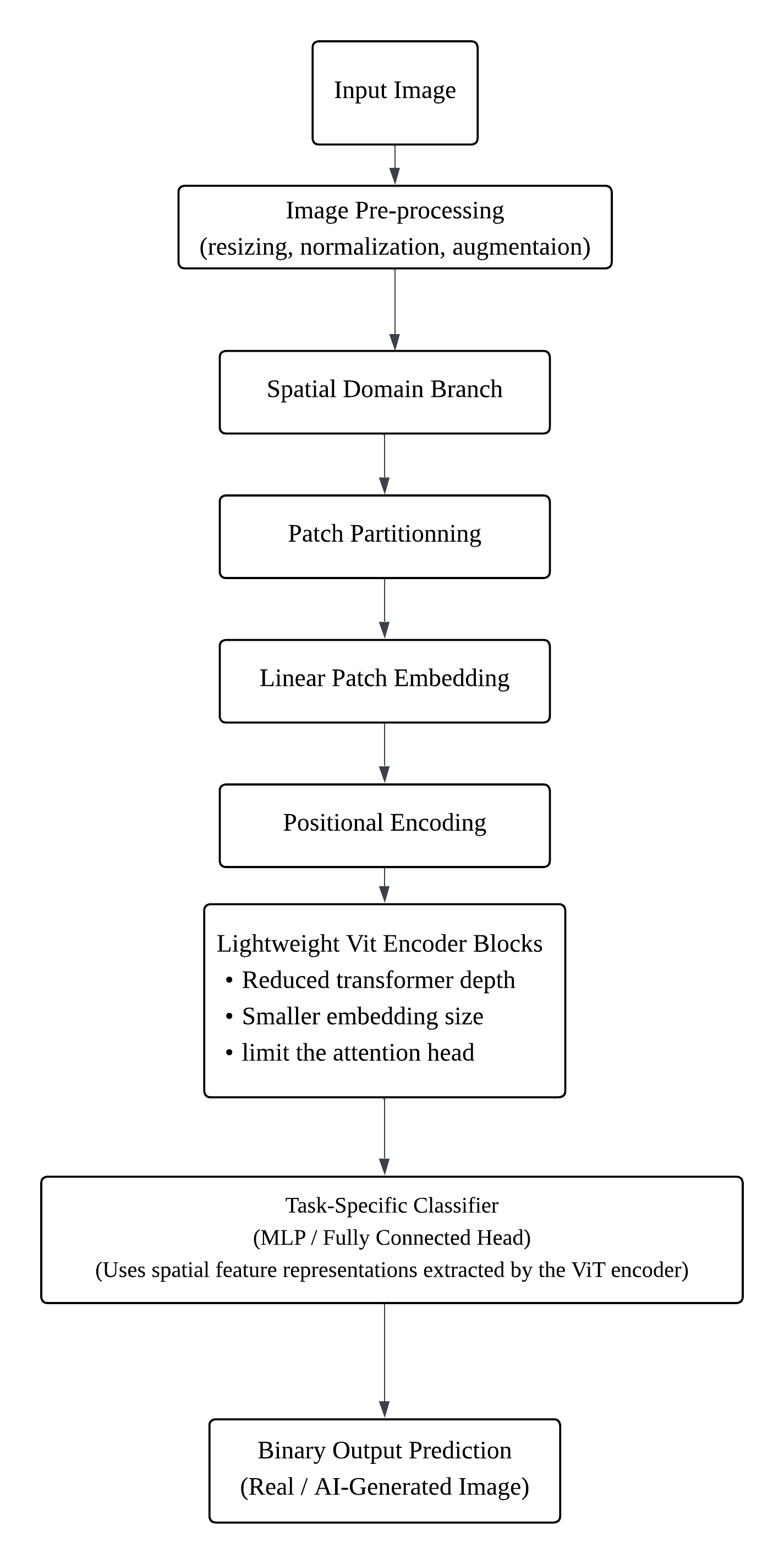
This system focuses on identifying subtle inconsistencies in textures, lighting, and structural coherence that may indicate synthetic origin.
Beginner’s Guide to AI Image Detection
AI image detection is the process of analyzing an image to estimate whether it was likely created by artificial intelligence or captured from the real world. As AI-generated images become more realistic, detection tools can help users better understand the possible origin of an image.
What does an AI image detector look for?
AI image detectors may look for visual patterns that are difficult for humans to notice. These can include unusual textures, inconsistent lighting, unnatural edges, strange background details, or patterns caused by image generation models.
Some detection systems also analyze frequency patterns, compression artifacts, or small statistical differences between real camera images and synthetic images.
Why is AI image detection important?
AI-generated images can be used for entertainment, design, education, and creative projects. However, they can also be misused to spread misleading information or create fake visual content. Detection tools can provide an extra signal when users want to check whether an image may be synthetic.
Can AI detectors be wrong?
Yes. No AI image detector is perfect. A real image may sometimes be flagged as AI-generated, and an AI-generated image may sometimes be classified as real. Results can be affected by image quality, compression, editing, screenshots, filters, lighting, and the type of image being tested.
Summary
AI image detection helps users estimate whether an image may be real or AI-generated. It works by analyzing visual and statistical patterns, but it still has limitations. The safest way to use an AI detector is to treat the result as guidance, not absolute truth.
Why AI Image Detectors Can Be Wrong
AI image detectors can help estimate whether an image may be AI-generated, but they are not always correct. A detector gives a prediction based on patterns it has learned from training data, not absolute proof.
1. Image compression can affect the result
Many images online are compressed by social media platforms, messaging apps, or websites. Compression can remove details, change textures, and create artifacts that may confuse an AI detector.
2. Screenshots may be harder to detect
Screenshots can contain mixed visual elements, such as text, icons, UI layouts, photos, videos, and compressed images. Because of this, a screenshot may not behave like a normal camera photo or a normal AI-generated image.
3. Edited images can confuse detection models
Cropping, resizing, filters, sharpening, background removal, and other edits can change the visual patterns of an image. These changes may reduce the accuracy of the detection result.
Summary
AI image detectors can be useful, but they can still make mistakes. Compression, screenshots, editing, realistic AI images, and unusual image styles can all affect the result. SusCap AI should be used as a supporting tool, not as the only method for judging whether an image is real or AI-generated.
A standard Vision Transformer divides an image into smaller patches, processes them through transformer layers, and uses the learned features to classify whether the image is likely real or AI-generated.